Funny Animal Scientist Hourly Rate: A Designer Review
As someone who has spent years navigating the intersection of digital graphics and physical thread, I approach every new machine embroidery design with a critical eye. The market is flooded with files that look great on a screen but fall apart under the needle. When I first opened the file for Funny Animal Scientist Hourly Rate, I wasn't just looking for a cute image; I was assessing its potential as a viable asset for my craft business and client projects. This piece falls squarely into the Crafts category, specifically as a versatile Graphics file, but its true value lies in how it translates from pixels to stitches.
The First Impression: Visual Weight and Character
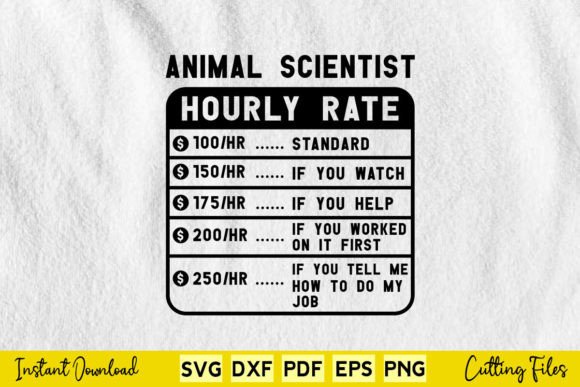
The initial mood of Funny Animal Scientist Hourly Rate is immediately engaging. It captures that specific blend of whimsy and intellect that resonates well with modern audiences. The layout balances the character illustration with the text effectively, avoiding the common pitfall where typography overwhelms the art or vice versa. For an embroidery project, visual clarity is paramount. The lines are distinct, which suggests that the stitch density will likely be manageable without creating a puckered mess on the fabric.
From a design perspective, the "scientist" theme offers a unique angle for personalized gifts. It moves away from generic animals and taps into a niche audience—teachers, researchers, science enthusiasts, and parents who appreciate humor in their home decor. The character's expression is key here; if the digitization preserves the subtle details of the eyes and the lab coat folds, this becomes a premium finished product. If those details get lost in the fill stitch, the charm evaporates. My immediate thought is that this works best as a focal point rather than a small accent.
Testing the Waters: A Real-World Scenario
To truly understand the utility of this digital embroidery file, I imagined a specific scenario: preparing a custom embroidered tote bag for a local boutique owner who sells items for STEM educators. Tote bags are a staple for any small shop product line because they are practical, highly visible, and offer a large canvas for designs like Funny Animal Scientist Hourly Rate.
In this context, the design would need to stand out against a sturdy cotton canvas. The contrast between the dark thread colors and the natural fabric would make the "Hourly Rate" text pop. However, I also considered how this might look on a heavy-weight sweatshirt for a holiday gift. On a fleece material, the texture can sometimes obscure fine details. Here, the robust nature of the animal character helps. The thicker lines of the illustration suggest it would hold up well even if the hoop size required scaling the design slightly larger to accommodate the bulkier fabric.
I also visualized this as an embroidered patch for a cap. Caps are tricky due to the curved surface, but the rounded elements of the scientist character seem forgiving. The main challenge would be ensuring the text remains legible when wrapped around the curve. In my experience, testing a printable mockup before committing to thread is essential to predict these distortions. If the text warps too much on the cap brim, it might be better suited for the front panel of a hoodie or a flat pillow cover.
Navigating Fabric and Technique Challenges
While Funny Animal Scientist Hourly Rate appears robust, there are areas where caution is required. Embroidery is as much about the substrate as it is about the design. Using this file on thin or stretchy fabrics, such as a lightweight t-shirt or a jersey knit, demands a high-quality stabilizer. Without proper backing, the tension from the fill stitch could cause the fabric to pucker, ruining the professional look of the custom apparel.
Textured fabrics present another hurdle. If you plan to use this on a nubby throw blanket or a thick wool sweater, the thread colors might not show up with the same vibrancy. The intricate parts of the lab equipment or the facial features could get lost in the weave. In these cases, I recommend using a satin stitch border around the design to define the edges clearly. Additionally, dark fabrics require a different approach; you cannot simply stitch white thread over black without risking visibility issues. A tonal effect or a light-colored underlay might be necessary to ensure the design assets remain clear.
Another consideration is the frequency of washing. Items like aprons or kitchen towels endure significant wear. The running stitch used for outlines must be tight enough to prevent unraveling over time. If the digitization includes very fine details in the corners, these are the first to fray after multiple wash cycles. As a reviewer, I advise checking the stitch density in the software before stitching. If the density is too low, the design may look sparse; too high, and it creates a stiff, plastic-like feel that customers dislike on clothing.
Practical Notes for Designers and Sellers
For my fellow Etsy sellers and creative entrepreneurs, here are a few critical steps before integrating Funny Animal Scientist Hourly Rate into your workflow:
- Test on Scrap Fabric: Never skip this step. Stitch a sample on the exact fabric you intend to sell. Check for puckering, thread breaks, and color accuracy.
- Verify Licensing: Since this is a digital product, confirm whether the license allows you to sell the finished goods. Some files are for personal use only, while others permit commercial sales of handmade items.
- Check Hoop Size Compatibility: Ensure the design fits within your machine's hoop dimensions. If it requires splitting the design, the alignment might be off, affecting the final presentation.
- Review Color Contrast: Test the design in both light and dark backgrounds. What looks good on a white mug might disappear on a navy blue pillow.
- Inspect Small Details: Zoom in on the file to see if tiny elements, like the glasses or pen in the scientist's hand, are too small to stitch accurately at your intended size.
Impact on Brand and Customer Perception
The choice of design directly influences buyer engagement and brand consistency. Funny Animal Scientist Hourly Rate brings a personality that can elevate a standard handmade product into a conversation starter. Customers often buy based on emotional connection; seeing a humorous, relatable character stitched onto a personalized gift adds significant perceived value.
However, professionalism matters. If the stitching is sloppy, the humor is lost, and the quality is questioned. A clean, well-executed application of this commercial embroidery design signals to the customer that you care about craftsmanship. It builds trust, especially for boutique branding where reputation is everything. Whether it is a holiday embroidery item or a year-round staple, the clarity of the image reflects the skill of the maker.
Ultimately, Funny Animal Scientist Hourly Rate is a strong contender for a variety of projects, from baby embroidery (if scaled appropriately) to adult sweatshirt embroidery. Its success depends entirely on the execution. By respecting the limitations of the medium and choosing the right applications, designers can turn this graphic into a profitable and beloved part of their portfolio. It is not just a file; it is a tool for storytelling through thread.