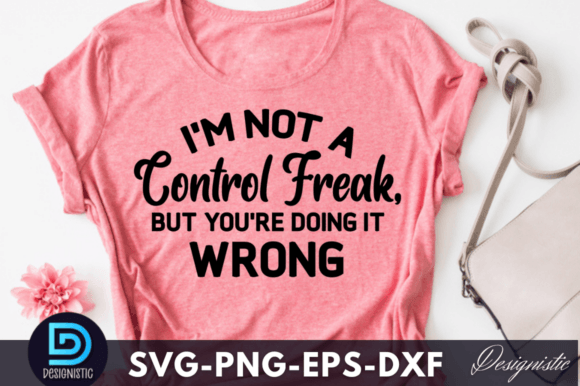
I'm Not a Control Freak, But You're Doing It Wrong
As a designer who has spent years turning digital files into tangible, stitched realities, I approach every new machine embroidery design with a mix of excitement and skepticism. The latest asset to catch my eye is titled I m Not a Control Freak, but You re Doin. At first glance, it falls squarely into the Crafts category as a witty Graphics file suitable for cutting machines like Cricut and Silhouette. However, my job isn't just to cut; it's to stitch, stabilize, and ensure the final finished product holds up under scrutiny. Let's dive into how this specific phrase translates from a screen to a sweatshirt or tote bag.
The First Impression: Mood and Visual Personality
When I load the preview of I m Not a Control Freak, but You re Doin, the immediate vibe is humorous, slightly sassy, and relatable. It’s the kind of text that works perfectly for personalized gifts or items meant to spark a conversation at a craft fair. The typography appears bold enough to command attention, which is crucial for custom apparel where the message needs to be readable from a distance. However, in the world of embroidery project planning, the devil is always in the details. Does the lettering have enough spacing to prevent thread bunching? Is the font weight consistent enough to handle different stitch density requirements?
For a small business owner or an Etsy seller, the visual personality of this design suggests a target audience that appreciates humor and lightheartedness. It fits naturally on kitchen towels, aprons, or casual tees. But before I commit to a production run, I need to visualize how the thread colors will interact with the fabric texture. A design like this relies heavily on contrast. If the fill stitch isn't dense enough, the negative space between letters could show through, ruining the professional look of the handmade product.
Real-World Application: From Hoop to Product
Let’s imagine a real scenario: I am preparing a batch of custom embroidered tote bags for a local boutique. The client wants something fun for their "Back to School" sale. I m Not a Control Freak, but You re Doin seems like a perfect fit. As I set up my machine, I consider the placement. On a canvas tote, the flat surface is forgiving, allowing for a larger hoop size and more intricate detailing. The satin stitch along the edges of the letters would pop against the natural beige canvas, creating a high-quality embroidered patch effect without actually needing a separate backing.
However, if I were to move this design onto a sweatshirt embroidery project, the challenges change. Knit fabrics stretch, and the ribbing on a collar can distort the text. I would need to use a heavy-duty stabilizer to keep the letters straight. The phrase is long, so wrapping it around a curved surface like a cap might cause the text to warp unless I adjust the layout significantly. In such cases, testing the design on scrap fabric is non-negotiable. I want to see how the running stitch handles the curves of the lowercase 'o' and 'e' characters. If the digital embroidery file lacks sufficient underlay, the fabric might pucker, making the finished item look amateurish rather than artisanal.
Baby Items and Nursery Decor
Another angle to consider is baby embroidery. Parents love funny onesies, but safety and comfort are paramount. The text here is playful, but is the stitching too stiff for a baby's delicate skin? When using this embroidery file on soft cotton or fleece, I would opt for a lighter stitch density to maintain the fabric's drape. The Graphics nature of the design means it might lack the complex imagery found in traditional nursery motifs, but its simplicity is its strength. It stands out clearly on a bib or a pillow cover, offering a modern twist to holiday embroidery or birthday gifts.
Navigating Challenges: Where Caution is Key
While I m Not a Control Freak, but You re Doin is versatile, there are specific situations where I would exercise extreme caution. Small hoop sizes are a major red flag for text-heavy designs. If you try to squeeze this entire phrase into a 4x4 inch hoop, the letters will likely become illegible, and the stitch count might exceed the machine's memory or capability for fine detail. Always check the dimensions before committing.
Textured fabrics like denim or thick wool can also pose problems. The uneven surface might cause the needle to skip or the thread to break, especially in tight corners of the letters. Similarly, thin or stretchy fabrics require a tear-away or cut-away stabilizer that matches the weight of the material. Without proper support, the applique design elements (if any) or the fill stitches could pull the fabric, leading to distortion.
Dark fabrics present another hurdle. To make white thread pop on black cotton, you often need multiple layers of underlay. If the machine embroidery design doesn't account for this, the result will be a muddy, grayish mess. I always recommend testing the design in black and white mockups first to gauge contrast. This step is vital for maintaining brand consistency and ensuring customer trust. A poorly executed stitch job can damage your reputation as a craft business owner faster than anything else.
Professional Notes for Designers and Makers
If you are considering using I m Not a Control Freak, but You re Doin for commercial embroidery projects, here are my top practical notes:
- Test on Scrap Fabric: Never skip this step. Stitch out the design on a piece of the actual fabric you plan to use. Check for puckering, skipped stitches, and thread tension.
- Review Thread Colors: Ensure high contrast between the thread and the background. For light fabrics, dark threads work best, and vice versa.
- Inspect Small Details: Zoom in on the smaller letters. Are they too thin? If so, consider increasing the line weight in your editing software before converting to an embroidery file.
- Confirm Licensing: Since this is a digital asset, verify the license terms. Can you sell the finished goods? Can you resell the digital file? This is critical for small shop products and digital product sellers.
- Use Proper Stabilizer: Match the stabilizer to the fabric type. Heavy knits need heavy stabilizers; light linens need lightweight ones.
- Create Printable Mockups: Before listing on Etsy or Instagram, create realistic printable mockup images to show customers exactly how the design looks on the final product.
Final Verdict on Value and Appeal
Ultimately, I m Not a Control Freak, but You re Doin is a strong contender for the Crafts market. Its humor makes it highly giftable, and its straightforward design allows for clean execution when handled correctly. For the creative entrepreneur looking to add some personality to their inventory, this design offers great potential. It enhances the visual appeal of custom apparel and adds a touch of wit to everyday items like tea towels and caps.
However, success lies in the execution. A great design can be ruined by poor technique, while a simple design can be elevated by precision. By taking the time to test, stabilize, and refine your process, you ensure that your finished product reflects professionalism and quality. Whether you are a hobbyist making gifts for friends or a seasoned decorator running a full-scale boutique branding operation, this design asset can be a valuable addition to your toolkit—provided you respect the intricacies of the embroidery process.